Workshop Plus
WORKSHOPS 2025
- Latest posts:
- Debra Wk2
Debra (Assisted Online Intermediate)
WEEK 2: EXERCISE 1

WEEK 2: EXERCISE 2

I did not do the cutting and switching as I am aware of this exercise and I wanted to get on to the next exercise.
Fair enough!
This is a very accurate result. As with Susan's, I flipped the left-hand half over onto the right-hand half... and apart from the longer nose, they're remarkably similar. Well done!
WEEK 2: EXERCISE 3

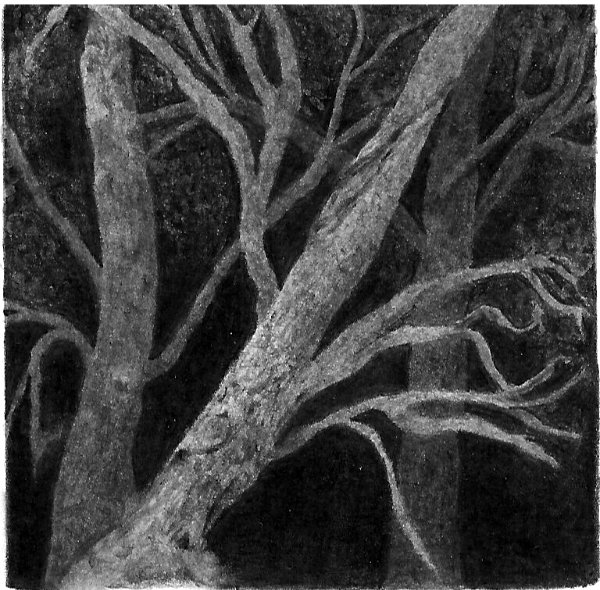
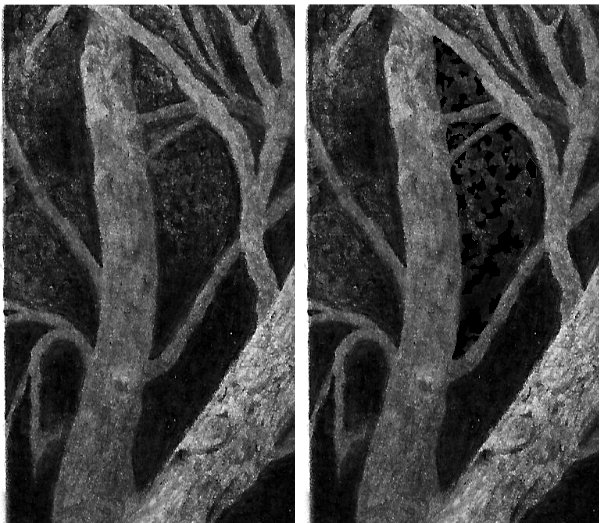
This was hard! I found I often saw what needed to be a bump or projection in the negative space and did not interpret it correctly. I can see why you emphasize practice. Overall, I " get" the concept but the devil is in the details.
Good work, Debra, this is virtually flawless. Keep practising. Once you become used to seeing negative space, you'll find it's an incredibly powerful tool with a myriad of uses - especially when you have problems correctly seeing a positive shape. Switching to drawing the negative spaces around it almost always solves the problem. And the good news... it becomes progressively easier with practice.
I also learned a lesson.. I got so involved in trying to get a shape correct that I forgot to move the card that protects the work from my hand. When I finished, I discovered I had smeared half of the picture. Not funny! Glad I learned that on a lesson and not on an actual piece. I tried to correct the smear as best I could but as you have mentioned in the past, it will never be the pristine white.
I'm really pleased that happened and that it happened when it did. It is unlikely you'll make that mistake again, and this time is was of little consequence.
I once found a fingerprint of mine in an otherwise flawless sky. Fingerprints cannot be removed, so I spent two days painstakingly darkening the sky around the fingerprint until it disappeared. Never again will I cause that to happen!
WEEK 2: EXERCISE 4

I did find the curve at the top of the middle negative space very interesting. When I was looking at the reference photo after finishing the drawing I realized I would not have understood that area looking at the positive. I absolutely would have struggled with it.
That's one reason why I chose this fork. It's so easy to think you know what it should look like without double-checking to discover it's quite different. You have slightly exaggerated it, but at least you did really see its shape. The tops of the gaps between the other two tines are looking good.
If I did this again, I would still mark on the outside of the frame, the centres of the top and sides. But I would then trust my eye to hand.
Ultimately, just the result matters, not how you achieve it... as long as you are aware that what you think it looks like is not necessarily what it actually looks like. And having the ability to see the surrounding negative space is very often a great way to observing something for what it really is - because it's just an organic shape for which your mind cannot be storing any "recognition" or "recognisable features".
WEEK 2: EXERCISE 6
OK, first - clever me - I worked out that your image was upside down. I did let Affinity's auto thingies do their magic to increase the contrast. And I'm imagining this is close to your original in appearance.

Well, I started to just do a negative space outline of the cactus and then I got intrigued by also drawing the negative spaces within the outline as there were so many petals, curves, shadows etc.
And all of that means you throughly understood what you were doing. Especially because you began to recognise negative space within the subject. Once you learn to see negative space you'll wonder how you ever managed before.
I just did a graduate degree in negative spaces. Of course I got mired in trying to create textures, forgetting where the light was coming from etc.
And that tells me two more important things. First, you experienced you flat drawing as being something real and three-dimensional. And, second, if it wasn't for that experience, how else could you apply lighting? Whether or not the lighting is correct doesn't matter - only that you recognised the need to apply lighting.
If I was to actually draw the cactus again, I would start by drawing individual parts to truly understand them.
Again, that's such a... I'm lost for words
This cactus drawing felt way above my ability but I learned a lot from it. And had a serious run of looking at the negative spaces rather than the positive outlines.
You had a go at it - successfully. And I suspect that searching for individual negative elements permitted you to break it down into manageable parts. Any time you believe you cannot do something you'll be proved correct. Just go ahead and do it, because, even it fails, you'll have learned from the experience, and be at least one step further forward to completing it successfully. I'm reminded of when I held a workshop in our local village hall for a dozen artists... and my next workshop was for far more artists in the huge conference centre of the Holiday Inn in West Yellowstone. I had no idea if I could manage that
Tutorials
by Mike Sibley